
Baizery
Open and play. No sign-up or download.
Baizery brings together FreeCell, Spider, and Klondike for people who care how the games actually play. Each one has its own page, and every deal number points to the same opening layout. That makes it easy to replay a tough game, compare lines with a friend, or step away in the middle and pick up the same run later on this device.
FreeCell Family
Classic Solitaire
Spider Family
Matching Games
Three Things Worth Knowing
One game, one dedicated page.
FreeCell, Spider, and Klondike each keep their own pace, rules, and interface. They are not squeezed into one generic layout that treats every game the same way.
Match the deal number, match the opening.
The same number always gives you the same start. That matters when you want to replay a hard game, compare lines with someone else, or work out whether the loss came from the deal or from your move order.
Unfinished games stay with you.
Your progress stays in the current browser on this device. Leave now, come back later, and keep going without sign-in friction or a cloud-save layer getting in the way.
How to Find the Right Game
Start with the kind of game you want to play.
If you want sequence and space management, start with FreeCell. If you want a longer game with heavier cleanup pressure, Spider is the better fit. If you want draw timing and hidden-card judgment, start with Klondike.
Click through and you are in the right place.
Each game has its own page, and the controls and rules are shaped around that game instead of being flattened into one generic frame.
Once you know what you want, the page should stop getting in the way.
The homepage should orient you quickly, then let you move straight into play without making you work for it.
Who This Is For
You want to start right away.
No email field, no verification step, and no app-install detour before the first move.
You are willing to replay hard deals.
Fixed numbers make it easy to run the same game again, compare different lines, and work on the exact positions that keep giving you trouble.
You often stop in the middle and come back later.
An unfinished game stays on this device, so you can reopen it instead of starting from scratch every time real life cuts in.
You care how different games actually feel.
This is not a site that flattens every solitaire variant into the same game with different card backs. Pace, pressure, and recovery windows stay visible.
Which Game Fits Your Mood?
Choose FreeCell if you want the whole game in view.
All fifty-two cards are visible from the start, so wins and losses usually come down to move order and space management. It is the cleanest choice when you want to think through a line instead of waiting on hidden cards.
Choose Spider if you want a longer cleanup-heavy game.
The layout crowds quickly, and the later stages feel more like controlled cleanup than fast tactics. It rewards patience, structure, and the ability to turn partial order into real progress.
Choose Klondike if you want draw timing and recovery play.
Hidden cards, reveal order, and recovery lines matter more here. Many games are decided not by what is legal, but by what you should avoid spending too early.
Three Games, Three Different Tests
FreeCell asks you to read the game before you touch it.
Because the whole layout is visible, the pressure lands on planning. The challenge is not to wait for hidden information to rescue you, but to keep enough room open for the winning route to stay alive.
Spider asks whether you can turn pressure into order.
The layout stays crowded for longer, partial runs become more valuable, and cleanup is not a cosmetic finish. It is the core skill through the second half of the game.
Klondike turns ordinary moves into timing decisions.
Draw order changes the shape of the whole game. A move can be legal and still be wrong because it spends a future turn, exposes the wrong hidden card, or cuts off the route back to something important.
Where People Usually Misread the Game
FreeCell: spare space is not free space.
A lot of players treat free cells like harmless parking spots. They are not. Every bit of space you spend casually makes it harder to move real weight later, especially before you open the first empty column.
Spider: movement is not the same as progress.
You can make plenty of legal moves and still leave the layout worse. The real question is not whether cards moved, but whether the move made later cleanup easier.
Klondike: not every reveal is worth taking now.
Turning over a hidden card feels productive, but some reveals cost more than they return. Good Klondike often means holding back a tempting move so the draw pile and tableau keep working together.
Why Fixed Deal Numbers Matter
Reviewing a loss properly.
Go back to the same game and walk the sequence back move by move. A lot of positions that feel impossible turn out to have been lost on order rather than luck.
Comparing lines with someone else.
Send the number to a friend and you are both looking at the same opening, not two similar shuffles that only feel close enough.
Working on one kind of position.
If a certain shape keeps stopping you, a fixed deal lets you try different routes until that pattern stops costing you games.
Keeping the useful games worth revisiting.
The games that actually teach you something are rarely the disposable ones. Fixed numbering makes them easy to revisit.
How to Play FreeCell
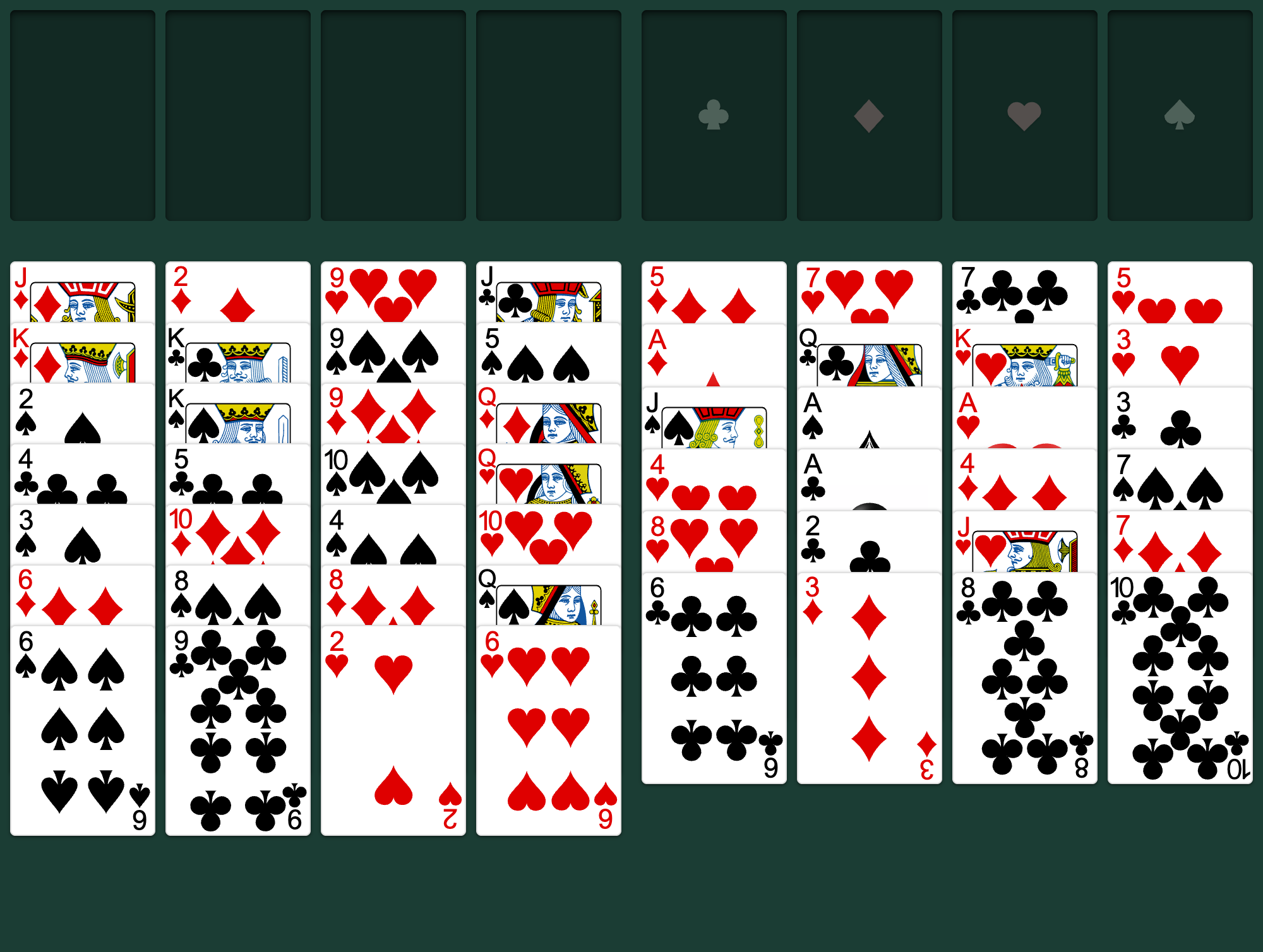
In FreeCell, all fifty-two cards are visible from the start. The game is not about lucky reveals; it is about creating space and preserving links. The real question is not how many moves you make, but whether you still have room to work.
Goal: build all four suits from Ace to King on the foundations.
Build downward in alternating colors across the columns.
Use the four free cells to hold single cards while you open space.
Move low cards to the foundations when it helps, but not so early that you break the links you still need in the middle of the layout.
An empty column is the most valuable working space in the game. Many difficult deals only start to open once you create the first one.
A lot of deals that look dead on first pass turn out to have been lost on move order. That is why replaying the same number matters: it lets you test judgment instead of luck.
FAQ
What is Baizery?
Baizery is a browser solitaire site. FreeCell, Spider, and Klondike each have their own page, so you can go straight to the one you actually want.
Do I need an account?
No. You can start immediately, and your current progress stays in the browser on this device.
What does a deal number mean?
Each deal number points to a fixed opening. The same number always gives you the same layout, which makes replay, review, and comparison possible.
Where should I start?
Start with FreeCell if you want full information and sequence play, Spider if you want longer cleanup-heavy games, and Klondike if you want draw timing and hidden-card decisions.
Why does each game have its own page?
Because the pace, interface, and decision patterns are different. Keeping each game on its own page makes those differences easier to see and feel.
Does anything here cost money?
No. Everything here is free to play.
About Baizery
Baizery is built to feel calm, clear, and low-noise. It separates games by type, keeps deal numbers fixed, and lets you move directly into the one you mean to play.
